Chipmunks Dance Trend: What It Is and How to Do It
The Chipmunks Dance trend explained: the song, each move in order, how to film it with three people, and what broke when we rebuilt it with AI.
The Chipmunks Dance trend is a three-person TikTok routine that took off in October 2026. Three people stand in a row in front of a phone, spin, swap places and take turns coming right up to the lens, in one take of about 25 seconds. The sound is a sped-up, squeaky "You Spin Me Round (Like a Record)".
Below we cover what the song actually is (guides disagree), the moves in order, how to film it with your own trio, and what went wrong when we rebuilt it with AI for our template. The moves come from our own frame-by-frame look at two of the big clips.
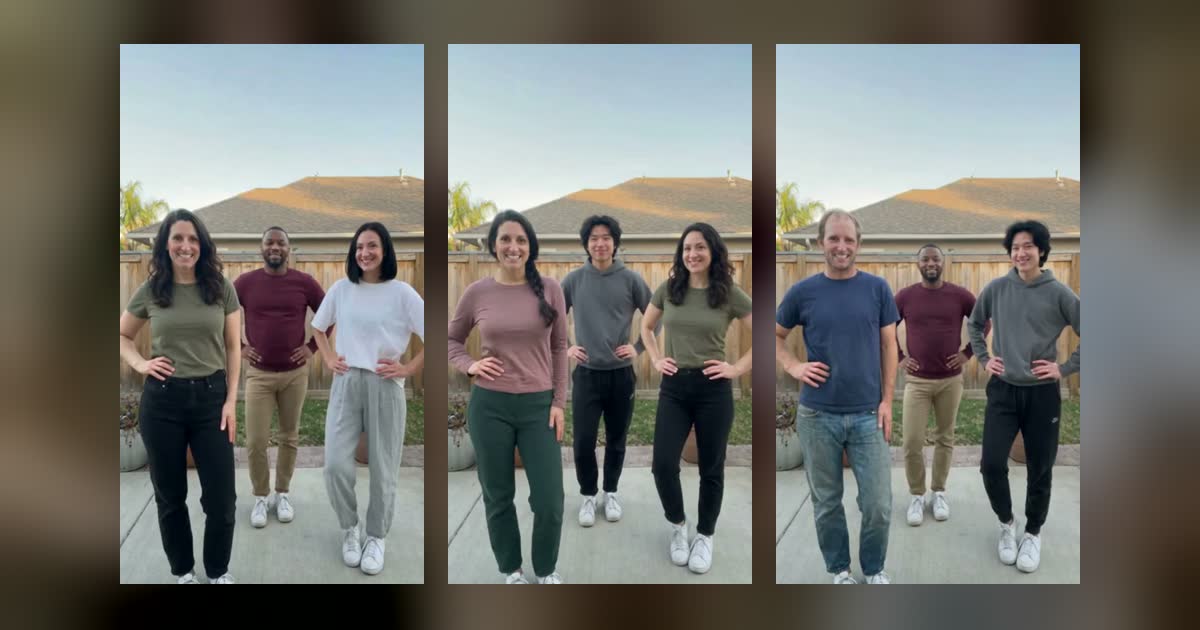
Our AI version, made from three photos. Tap to play with sound.
What is the Chipmunks Dance?
The Chipmunks Dance works like a relay. Nobody is the star for long: each dancer gets a few seconds at the front while the other two keep moving behind them. The phone never moves and there are no cuts, so the fun is in watching three people hand off without crashing.
The name comes from the voice in the song, not from anything on screen. The dancers are real people, often siblings or roommates. It first spread as a Halloween group idea, with pastel outfits and round ears, which is why you'll also see it called the Alvin and the Chipmunks dance or the Chipettes dance. RapGlow has no connection to Alvin and the Chipmunks or its owners.
Source: @wenersisters on TikTok. Embedded from TikTok, not made by us.
What song is the Chipmunks Dance?
Everyone agrees it's a high-pitched "You Spin Me Round (Like a Record)". Past that, the guides split:
- A DJ mashup. Atlas Cloud's guide says the sound joins the Chipmunks' cover from the soundtrack of The Squeakquel (2009) to will.i.am's "Big and Chunky", which comes in about halfway. It dates the mashup to August 22, 2026, with a remix account's repost on August 31.
- A sped-up original. Most tool sites call it a sped-up edit of the 1984 single by Dead or Alive, and don't mention a second song.
We haven't settled this by ear, so we won't pick a side. In practice it barely matters, because a streaming service probably won't have the TikTok cut under either name. To use the real sound, open it from a clip in your feed.
Where the trend came from
The Chipmunks Dance took off in October 2026 with @wenersisters (October 15) and @athenaa_c (October 17, about 18 to 19 million views), though @icm_triplets posted similar moves in April 2024. These dates come mostly from trend trackers and tool sites, and they don't always match. View counts are approximate and still moving.
- April 2024: @icm_triplets post similar moves on the Chipmunks' track. One site credits them as the origin, while another points out the sound isn't the same cut.
- August 2026: the sound goes up on TikTok.
- October 3: a TCU Showgirls trio, the earliest of this wave that one guide could find.
- October 15: @wenersisters dance it in a hallway in pastel costumes. We read about 4.9 million views on November 4.
- October 17: @athenaa_c post the most-played version, at about 18 to 19 million views.
- October 27: @bopieandjo do it barefoot on a tennis court in plain sweats, and costumes become optional.
- October 30: a tutorial for a one-photo CapCut template passes a million views.
- November 1: US Google searches for "chipmunks dance", climbing since October 22, hit their peak.
The moves, in order
The first 15 seconds run in six moves: the row, arms up, a first spin, a second turn, a third turn and a blown kiss. We stepped through the first 15 seconds of the @wenersisters and @bopieandjo clips. The order is the same in both. These timings are from the hallway clip:
- The row (0 to 2 s). Three in a line, shoulders bouncing, arms loose.
- Arms up (2 to 4 s). Arms start waving overhead. On the tennis court this is a finger twirl.
- First spin (4 to 8 s). The dancer on the right spins into the front center and the other two slide out to the sides. The front dancer stays mostly back-to-camera, hips swaying and hair swinging, while the two behind dance with their hands at their heads.
- Second turn (8 to 12 s). Another rotation brings a new dancer right up to the lens, face on, both arms high, with a hair toss near 10.6 s. Then they turn and spin back.
- Third turn (12 to 14 s). The last dancer steps up, hands at the chest, face on.
- The kiss (14 to 15 s). The first front dancer slides in very close from the right, blows a kiss and turns away.
The two clips differ in ways that tell you what's flexible. Some guides say the middle dancer stands half a step forward, but in the hallway clip that dancer starts a step behind. On the court, one dancer runs at the lens laughing until their face fills the frame, and another does their whole solo with their back turned. Keep the order and make the rest your own.
We couldn't check the last 10 seconds frame by frame, so this part is secondhand. Atlas Cloud says it's stomps and arm swings on the beat switch, and another site says all three rush the camera at 0:23.
How to film it with your trio
If all three of you can be in one place, this costs nothing and needs no tool.
- Fix the phone. Put it on a stand, vertical, at about waist height and tilted slightly up. Both clips show ceiling or sky at the top.
- Find your spot. Stand back until all three of you are visible from at least the shins up. Mark the row on the floor if you can.
- Pick the order first. Decide who spins in first, who gets the arms-up close-up and who blows the kiss. Most mix-ups come from two people heading for the front together.
- Walk through the handoffs. Practice the crossings at half speed without music. The solos are the easy part.
- Lock focus if your camera lets you. Otherwise the picture can pulse when someone rushes the lens.
- Film it in one take. Plan on several tries. A cut would spoil the look, so restart rather than patching two takes together.
What broke when we made it with AI
We ran 11 test takes on three video models, using three photos and a source clip we made ourselves. One model passed 2 of 7 takes, a cheaper one failed its only take, and the one we kept passed all 3. That's our own small test and not a verdict on every tool, but here's what to look for in any of them.
The trouble starts around second 8. Most failed takes looked fine at first and went wrong when the second dancer came forward. Judge a render by its last 7 seconds, not its opening.
People disappear. On several takes one of our three people was gone by 8 seconds, and the actor from our source clip stepped into that person's close-up.
Dancers trade roles. Faces can stay sharp while people end up in the wrong part of the routine, such as one dancer taking over another's close-up. It's easy to miss on a quick watch.
Some groups are harder. Three men failed every time on the model that managed 2 of 7, including after we added a more detailed, time-coded prompt. The same prompt then passed on the model we kept.
A good demo proves little. On that weaker model, one prompt passed with one group and failed with two others. If a tool shows you one clean example, you still don't know how often it comes out that way.
Which photos work best
Use three photos, one person in each, from head to knees if you can, since everyone dances in the clothes from their photo.
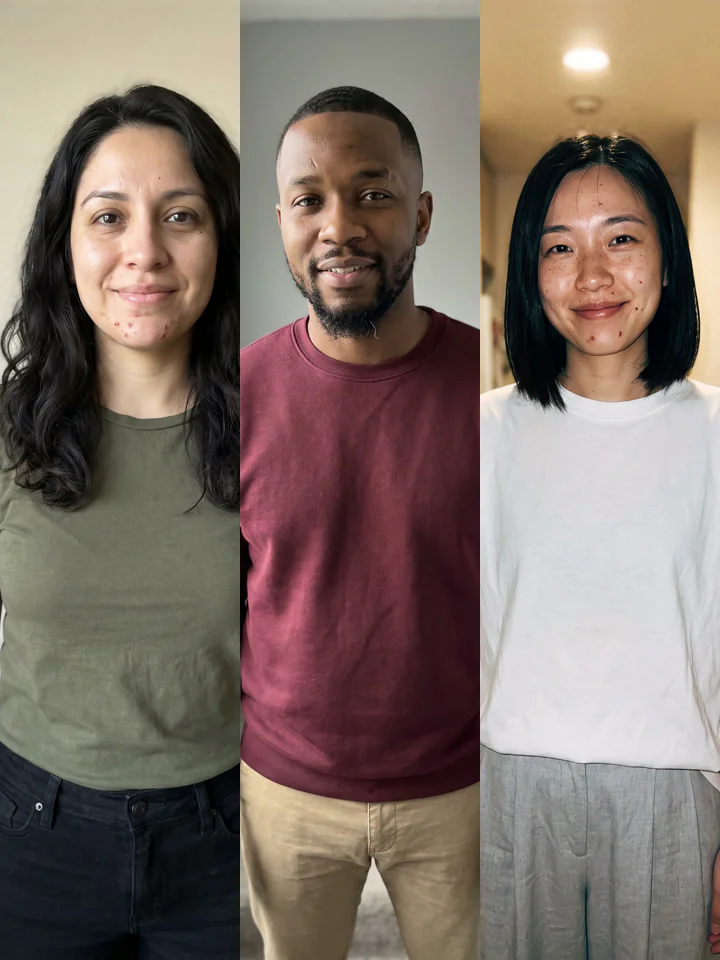
The three photos behind the example above.
- One person in each photo. Other tool sites report that faces mix when people share one picture, and our template doesn't take group shots either.
- Head to knees if you can. Everyone dances in what they wear in their photo. Stop at the waist, and the AI has to guess the rest.
- A sharp, front-facing face. Use good light and no sunglasses. The close-ups show every detail.
- Permission. Use yourself or adults who agreed to be in it. No celebrities and no children.
How to make a Chipmunks Dance AI video
Our Chipmunks Dance AI page does it from three photos with no prompt to write. The order you upload decides the roles: left, middle, right, and the middle spot gets the biggest close-up. You get a 15-second vertical MP4 with the sound on it for 45 credits at 480p or 90 at 720p. This template has no free try, and the smallest pack is $9.90 for 60 credits. To see your face in a RapGlow video first, every account gets one free 4-second clip on Hotel Lobby AI or Burning Bridges AI.
There are limits. It covers the first 15 seconds, so you get all three turns but not the ending of the longest TikTok versions. The backyard setting and the moves are fixed. It needs three different adults, so one photo, group photos and pets don't work yet. If your friends are nearby, filming it yourselves is free and more authentic.
Only two of you? The Hop Hop Hop trend is a duo joke made from two photos. For a one-photo meme, see our Tiny Desk AI guide.
Before you post
- Label it as AI. TikTok, Instagram and YouTube all have a setting for this.
- Get all three people's OK. Each of them will appear in a public video.
- Mind the sound. The song belongs to its rights holders, and platforms can mute or limit a video whose audio they flag. That applies to our videos too, since they come with the trend's sound. Take extra care with a brand or an ad.
- Pick the sound in the app. Choosing the trending sound in TikTok's editor puts your post on that sound's page with everyone else's.
- Use the tag. One tracker counted about 385,000 videos under #alvinandchipmunks on November 1.
FAQ
Is the Chipmunks Dance from the Alvin and the Chipmunks movies?
The cover is on the soundtrack of The Squeakquel, but the routine looks like a TikTok creation. One tool site says it comes from the movie and another says it doesn't, and we haven't seen a clip that shows it.
Who started the Chipmunks Dance?
Nobody has clearly shown who made up the moves. @icm_triplets in April 2024 is the most common answer, but that claim is disputed. The wave that made it a trend began in October 2026.
Can you do the Chipmunks Dance with two or four people?
You can adapt it when filming, since it's just a rotation with more or fewer turns. It's built for three, though, and three is what people expect to see. Our template takes exactly three photos.
Can I do the Chipmunks Dance alone?
Not as filmed. Some tools and a CapCut template turn one photo into a solo or a trio of you. We don't offer that and haven't tested them.
Do you need costumes?
No. Costumes were part of the early Halloween clips, but some of the biggest later versions are in plain sweats. For an AI version, wear them in your photos, as clothes come from there, though small accessories may not carry over.
How long should the video be?
The TikTok versions run about 25 seconds. All three turns happen in the first 15, so a shorter clip still tells the whole story.